← THEK Bookstore · Librería THEK Leer en español: La Histéresis y la Dinámica →
THEKRESEARCH INSTITUTE
STRUCTURAL DYNAMICS · BOOK 1

Discover how buildings absorb and dissipate earthquake energy.

Why do structures sway, deform, and sometimes lose their strength when the ground moves?

Hysteresis and Dynamics makes the science behind earthquake response understandable—through plain-English explanations, illuminating figures, and mathematical models developed by the author.
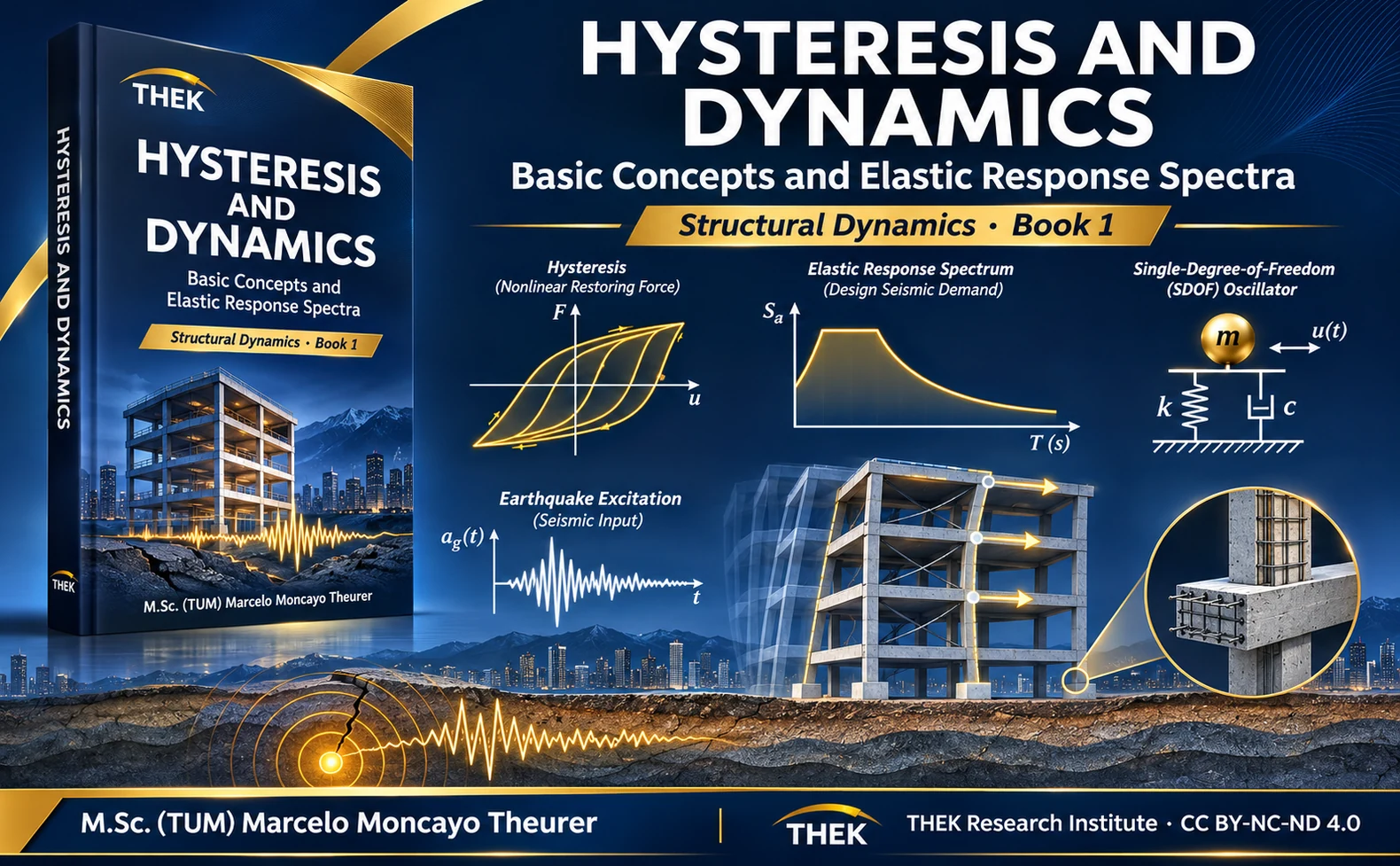
Hysteresis and Dynamics, Book 1: structural dynamics, hysteresis curves, elastic response spectra and earthquake motion
Hysteresis and Dynamics — Basic Concepts and Elastic Response Spectra
Written by M.Sc. (TUM) Marcelo Moncayo TheurerTopics: Hysteresis · Earthquake Response · Elastic SpectraPublisher: THEK Research Institute
▤
Start with the fundamentalsConcepts explained step by step, without losing engineering depth.
∿
Go beyond conventional examplesDiscover the author's original formulations and research.
✉
Learn beyond the last pageSend your technical questions directly to the author.
WHAT THIS BOOK OPENS UP FOR YOU

Four ways to understand an earthquake—through the eyes of an engineer

From the first tremor recorded on the ground to the energy a building can dissipate, follow the story of how structures behave under real seismic motion.

THEK-2PIM & hPIM
Step-by-step dynamic response

THEK-2PIM & hPIM

What does a real earthquake do to a building second by second? Learn how the author’s numerical methods turn recorded ground motion into a history of structural displacement, velocity, and acceleration.
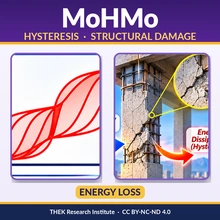
The MoHMo model
Hysteresis and damage

The MoHMo model

Why can a building survive one earthquake yet be weaker afterward? Explore how repeated motion dissipates energy, changes stiffness, and reduces strength through the author’s Moncayo Hysteretic Model.
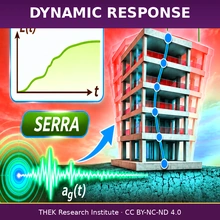
From shaking to response
A structure in motion

From shaking to response

Follow seismic waves from the ground into a structural model. Discover the practical meaning of vibration, deformation, damping, and step-by-step dynamic analysis.
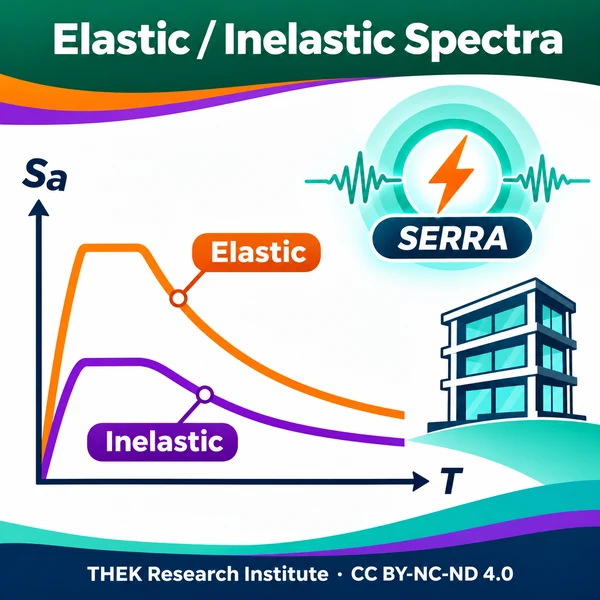
See the big picture
Spectra and seismic energy

See the big picture

Find out why two buildings can react very differently to the same earthquake. Learn to interpret natural period and elastic response spectra, and explore seismic energy release through SERRA.

The book develops elastic response spectra in detail and introduces inelastic behavior and original methods in context. The A+ illustrations are promotional visuals.

MORE THAN ANOTHER TECHNICAL MANUAL

Understand the physics. See the mathematics. Recognize what matters.

The author moves between everyday intuition and engineering detail, making the material accessible to new students while providing equations, methods, and context for experienced professionals.

Meet MoHMo, THEK-2PIM / hPIM, THEK-SPOT, and SERRA as part of a larger journey through structural response and seismic energy.

A structure doesn't simply move during an earthquake. It responds, dissipates energy, and carries the history of that motion.
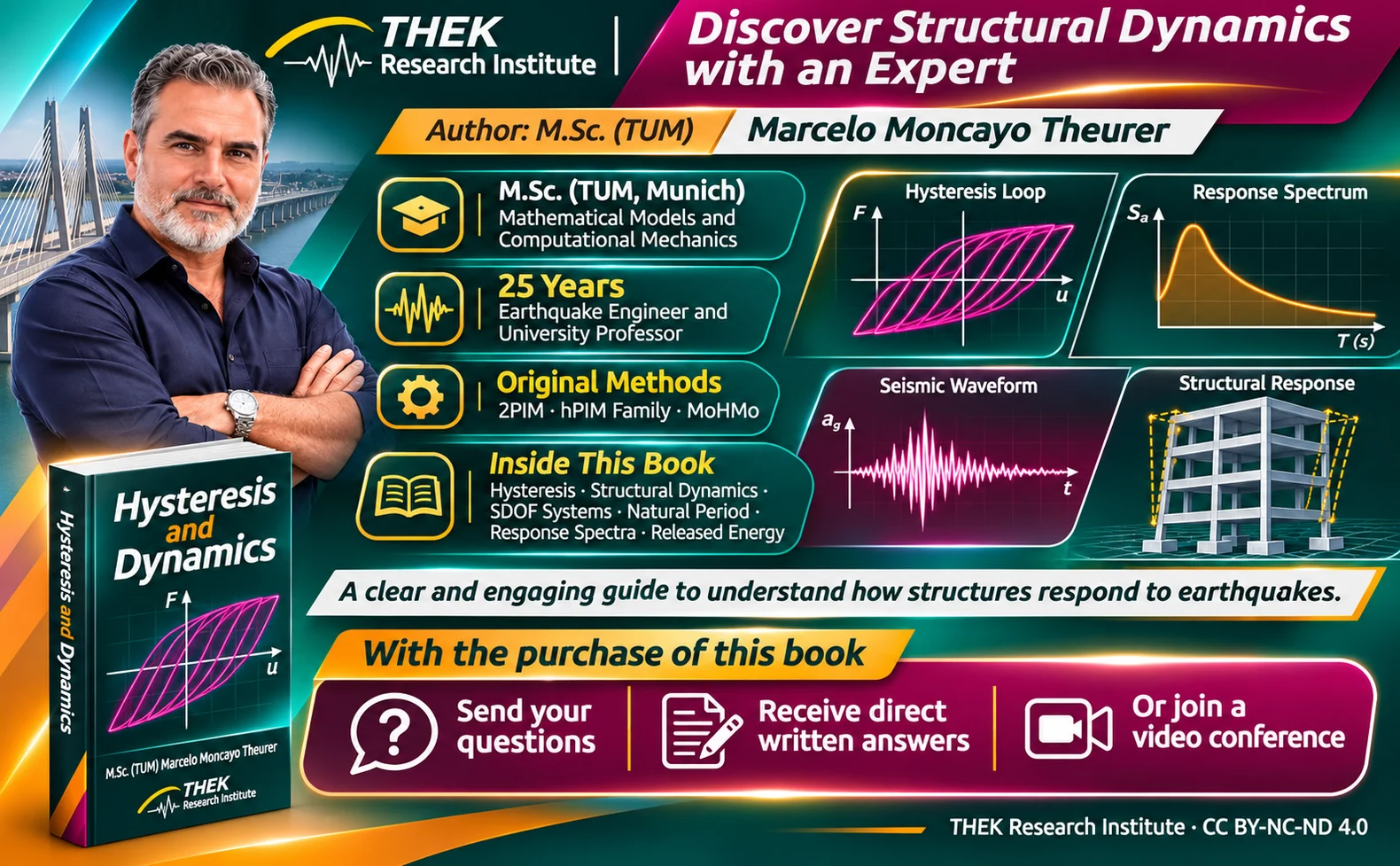
Marcelo Moncayo Theurer introducing hysteresis, original mathematical models, response spectra and his book
Comparison of elastic and inelastic response spectra
AN INTUITIVE ROUTE INTO SEISMIC ENGINEERING

From “Why does it shake?” to “How much can it withstand?”

The core questions of structural dynamics become easier to explore when you can see the links between them.

  • Understand the role of mass, stiffness, and damping in a building’s motion.
  • Learn how hysteresis makes energy dissipation visible.
  • Follow the time history of a structure exposed to real earthquake records.
  • See why the natural period influences seismic demand.
  • Explore the relationship between response spectra, damage, and released energy.
See the Nine Chapters ↓
A LOOK INSIDE THE MANUSCRIPT

Real figures from the book—not just promises

Preview selected technical graphics used in the manuscript to explain structural motion, hysteresis, spectra, and inelastic behavior. Click any figure to enlarge it.

Real ground motion, real structural responseFrom an earthquake record to a calculated structural response. A diagram from the manuscript.
The language of hysteresisForce–displacement loops reveal how a structure responds under repeated loading.
Elastic response spectrumSee how a structure’s natural period influences the acceleration demand.
Energy as an engineering quantityEnergy-spectrum research connects ground motion with the demand on structures.
Displacement responseIllustration of displacement demand across different natural periods.
When behavior becomes inelasticThe difference between elastic and inelastic material behavior.

Selected illustrations extracted from the supplied manuscript. Original figure credits and references are available in the book.

YOUR LEARNING JOURNEY

Nine chapters. One connected understanding of earthquake response.

Build your knowledge from structural fundamentals to original research into hysteresis, response spectra, and the energy released by earthquakes.

01
Structural DynamicsHow movement, inertia, and damping reshape the engineering problem.
↗
02
Seismic Design MethodsFrom static loads to time-history analysis, spectra, and pushover.
↗
03
HysteresisDeformation cycles, damage, energy dissipation, MoHMo, and DuDeL.
↗
04
Seismic RecordsWhat accelerograms and seismograms reveal.
↗
05
Single-Degree-of-Freedom SystemsThe model that makes step-by-step response understandable.
↗
06
The Spring SystemStiffness, Young’s modulus, and physical intuition.
↗
07
Natural PeriodWhy structures have their own vibration rhythms and the THEK-SPOT formulation.
↗
08
Response SpectraElastic response spectra, Guayaquil measurements, and design applications.
↗
09
Released EnergySERRA, SERRA–RESPROA, and examples from Mexico, Panama, and Venezuela.
↗
A DIFFERENT KIND OF ENGINEERING BOOK

Learn with the clarity of a university classroom

Years of teaching, original research, and a commitment to resilience come together in one educational experience.
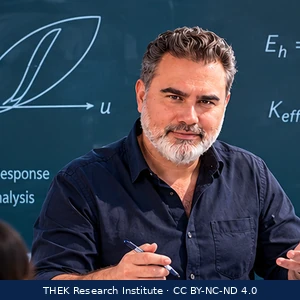
Marcelo Moncayo Theurer giving a lecture on structural dynamics and hysteresis

A university classroom in a book

Clear explanations and visual reasoning help you understand, not just memorize, how a structure behaves during an earthquake.

Young engineers studying structural dynamics and working with seismic models

25 years of teaching, now at your service

Learn from experience gained while teaching engineering students and working with real structural challenges.

THEK Global Resilience Foundation and commitment to resilience research

Your purchase supports resilience

As stated by the author, 25% of this book’s revenue is dedicated to supporting knowledge and technologies that advance resilience through THEK Global Resilience Foundation.

Portrait of Marcelo Moncayo Theurer standing beside a cable-stayed bridge
M.Sc. (TUM) Marcelo Moncayo Theurer · Engineering, research, and teaching
MEET THE AUTHOR

M.Sc. (TUM)
Marcelo Moncayo Theurer

Earthquake engineer, university professor, and founder and scientific director of THEK Research Institute. His work brings together computational mechanics, seismic engineering, applied research, and decades of teaching.

  • Master of Science, Technical University of Munich (TUM), Germany.
  • Postgraduate training in earthquake engineering in Japan (IISEE–BRI / University of Tokyo).
  • 25 years educating young engineers and working in engineering practice.
  • Recognition from the National Congress of Ecuador, 2001.
  • Co-director of the design of the San Eduardo Tunnels in Guayaquil.
Meet the Author at THEK ↗
YOUR LEARNING DOESN'T END ON THE LAST PAGE

Still have questions?
Ask the author directly.

Buying Hysteresis and Dynamics can be the start of a conversation. Send your questions about the book directly to the author and request a personal written reply or a videoconference, subject to coordination and availability.

research@hithek.com
Email the Author ↗
YOUR NEXT STEPS

From reading to real understanding

  1. Explore the nine chapters and sample figures.
  2. Write down your questions about hysteresis, dynamic response, and spectra.
  3. Email the author to request a written answer or arrange a video conversation.
Contact: research@hithek.com. Replies and calls are arranged directly with the author; no fixed response time is promised.
READY TO GO DEEPER?

Make the next earthquake engineering concept click.

Hysteresis and Dynamics — Basic Concepts and Elastic Response Spectra.
M.Sc. (TUM) Marcelo Moncayo Theurer · Structural Dynamics, Book 1.

Buy on Amazon ↗
Book figure